Harbourside Gymnastics Information
Class Fees: Fees are payable monthly in advance of class. You have two options either set up pre payment on your love admin account via direct debit or bank card attached to your PayPal account, or you can pay at reception in cash or by card. Once or twice a year fees will be reviewed and maybe subject to an increase.PLEASE NOTE FEES WILL INCREASE FROM £44.16-£49.99 FROM 1ST AUGUST
All gymnasts will require an insurance membership at the price of £35 this also registers you with IGA our governing body for the sport of gymnastics and also fully insures you to take part in all activities at Harbourside Gymnastics Academy for the year September to September (even if you join part way through the year it will still be due again 1st September). Adults will require a membership to HGA price is £10. All membership fees are non refundable.
If your child is sick or on holiday fees still need to be paid for your class regardless if you attend or not. The same applies to self isolation during covid19. If there is an issue i.e. long term illness please speak to a member of staff. I am afraid we can no longer offer class swaps if you are unable to attend one week.
If fees go unpaid for over two weeks your child will not be permitted to take part until the overdue fees are paid up to date. They will also not be permitted to add any extra classes, activities or workshops until the outstanding is cleared in full.
If you decide to stop your sessions please give one full months rolling payment notice before your next four week payment is due once paid your fees are non refundable if you decide to leave during the four week period of pre paid sessions.
All fees are not a weekly charge but a rolling monthly payment so some months you will get an extra class this is to cover the closure period we have of two weeks over Christmas and new year.
Jewellery and Attire: We have a strict no jewellery policy in the gym for health and safety reasons please either remove jewellery before class or come with them taped over the coaches are not permitted to remove a child's jewellery.
Hair needs to be tied back neatly before the start of class and away from the face.
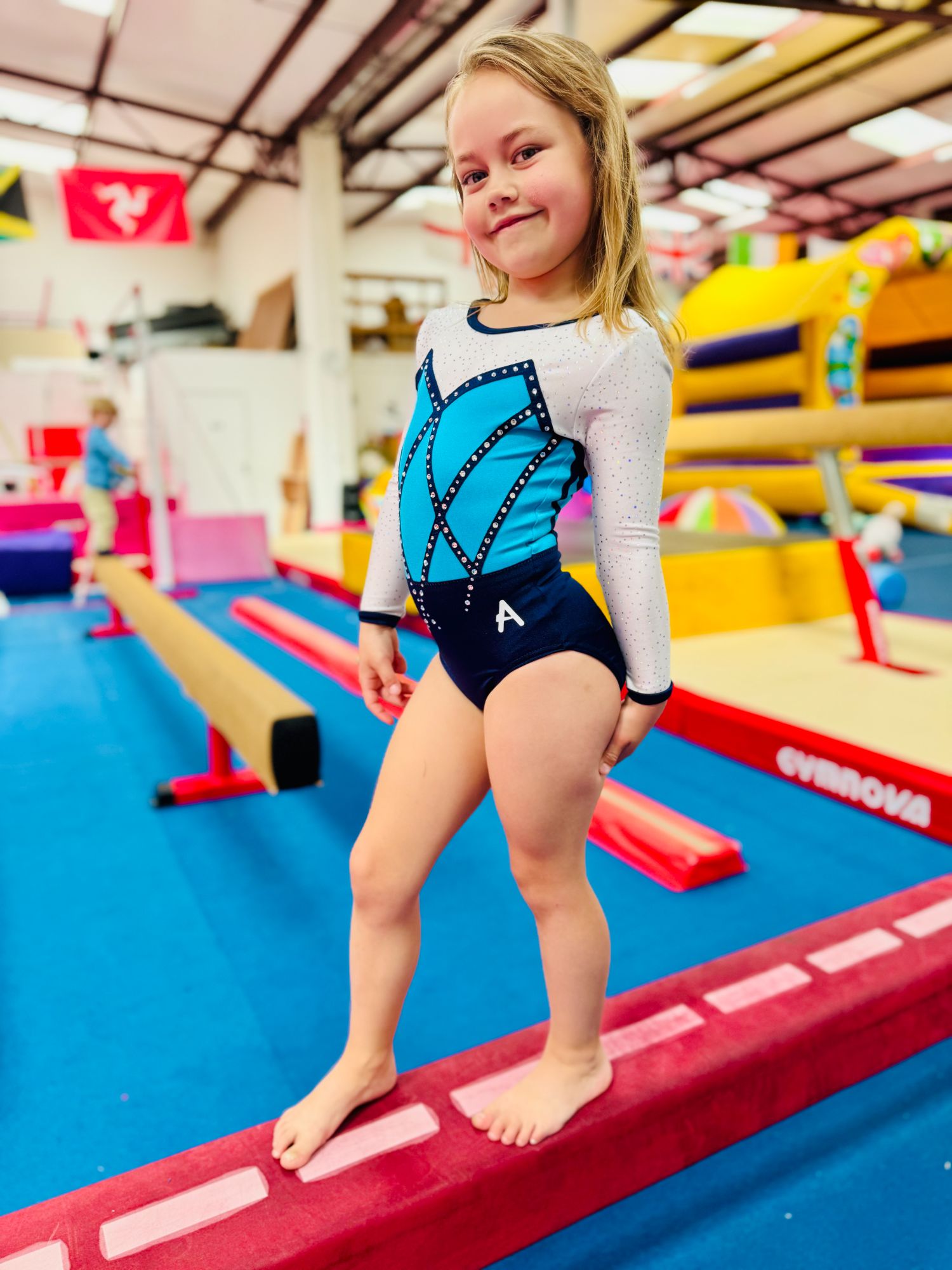
Clothing needs to be gymnastic leotard and shorts or leggings/short or leggings and crop top(not to strappy) No belts, buckles, zips or buttons or loose clothing or hoodies. There is a variety of attire available for purchase in the shop in reception including our club leotards for girls and boys and matching shorts this isn't a requirement but lots do like them.
Food and Drink: No food is to be eaten during sessions unless told to by your coach if you are a squad member doing a long session. Bottled water is permitted in the gym in sealed top bottles, we will not be allowing canteen bottles in the gym.
Extreme Weather and Unforeseen Closure Policy
In the event that the club is required to close due to circumstances beyond our control, including but not limited to extreme weather conditions (such as heatwaves, heavy snow, ice, flooding, or storms), road closures, traffic incidents, accidents, government advice, or any situation where it is deemed unsafe for participants, coaches, or staff to travel or attend sessions, the affected classes may be cancelled.
As these circumstances are outside the club’s control, refunds, credits, or reductions in fees will not be provided for missed sessions resulting from such closures.
Where possible, and at the club’s discretion, alternative catch-up sessions, make-up classes, or other suitable arrangements may be offered. However, the provision of catch-up sessions cannot be guaranteed and will be subject to venue availability, staffing, and scheduling constraints.
The club will make every reasonable effort to notify members of any closures as soon as possible via its usual communication channels.
Parents in the gym: Parents are not permitted into the gym area unless asked to by a member of staff, or taking part in one of our pre school activities or you are using the toilet facilities (please remove footwear before entering the carpet area) We also ask that parents refrain from parent coaching from the sides it is very distracting to gymnasts and coaches. You are welcome to stay and observe from the seating area or you can drop and come back at the end of class.
Gymnasts Conduct and Behaviour: All gymnasts are expected to listen and behave at all times in the gym. Gymnastics is a high risk sport and with this in mind a gymnast misbehaving will be given a verbal warning if the the behaviour continues the coach may ask them to sit out until they feel the gymnast can re-join the session safely.
Squad gymnasts or GFA gymnasts
By accepting your place in squad you agree to purchase the squad kit, only to be worn at competitions or displays. You agree to attend training on time and in suitable clothing with neat hair and to notify us if you are unable to attend due to holidays illness etc. You agree to have the required items in your kit bag chalk, gloves loops.and polish, hand guards,water bottle, notebook and pen. When it comes to competitions you will try your best to enter if you are selected, the final decision on whether a gymnast will attend any competition is down to the coach and is based on if a gymnast is safely performing routines, behaviour is of the standard we expect during training and a childs general attitude is one of positivity, willingness to do their best and decisions are always made with the gymnasts best interests and safety.
Outside of gym we do not recommend online chat groups between squads/gymnasts. No bullying or negativity towards other gymnasts/coaches and the club will be tolerated we highly advice parents do keep an eye on this.
Photographs and Videos: No taking of photos or videos by parents/guardians is permitted in the gym of any gymnasts or coaches at any session. If you require photos of your child please speak to a member of staff so something can be arranged at the end of a session.
Safety: We always have a member of staff by the internal door and in reception of the end of each session please make sure your child is collected from inside the building at the end of their session.
Car Park and Belongings: Anyone using the car park does so at their own risk. Any belongings bought into the gym by gymnasts and parents is done so at their own risk.
Harbourside Gymnastics Academy
HGA High Temperature Policy
Purpose
The purpose of this policy is to protect the health, safety, and wellbeing of gymnasts and staff during periods of high indoor temperatures, including during summer months and heatwaves.
As a guide, when external temperatures exceed 27°C, one or more elements of this policy are likely to be implemented. However, all decisions will be based on the actual conditions within the gym and the professional judgement of senior staff.
We recognise that individuals can be affected by heat in different ways. If you have any concerns about how your child may cope in warmer conditions, please speak to a member of our team. We will always aim to make reasonable adjustments where possible to ensure your child feels safe and comfortable. Our priority is to maintain a balance between safety and enjoyment, even during periods of hot weather.
This policy aims to:
* Provide clear and consistent guidance on how sessions are managed during periods of high indoor temperatures.
* Protect the health, safety, and wellbeing of gymnasts, coaches, and staff.
* Reassure parents and carers that HGA takes proactive steps to provide a safe training environment.
* Outline how parents and carers can support their child’s safety and comfort during hot weather.
Managing High Temperatures
In line with best practice and guidance from relevant governing bodies, HGA takes proactive steps to manage the risks associated with high indoor temperatures.
The gym can become warm very quickly, particularly during periods of sustained hot weather. While there is no legal maximum workplace or indoor sporting temperature, research and industry guidance suggest that temperatures above 30°C may become uncomfortable, and temperatures approaching or exceeding 35°C may present increased risks depending on factors such as humidity, ventilation, activity levels, and individual tolerance.
When higher temperatures are forecast or observed within the gym, the following measures may be implemented:
Water Access
All gymnasts will have access to cool, fresh drinking water throughout their session. Coaches will actively encourage regular hydration and provide additional opportunities for gymnasts to drink water.
Ventilation and Airflow
Where safe and practical, doors will be opened and fans used to improve airflow and help regulate temperatures within the gym environment.
Modified Activity
Coaches may adapt session content to reduce physical intensity. Activities may focus on lower-exertion skills, technical development, flexibility, or other suitable training elements to minimise the risk of overheating.
Additional Rest Breaks
Extra water and rest breaks will be incorporated into sessions to help prevent dehydration, overheating, and fatigue.
Cooler Clothing Options
Gymnasts may wear lighter, less restrictive clothing, such as shorts and sleeveless tops, where appropriate and safe to do so.
Adapted Session Structure
For sessions lasting longer than one hour, activity may be divided into shorter training periods with additional water and rest breaks throughout the session. While the overall session duration will normally remain unchanged, breaking activity into smaller sections helps reduce the risk of dehydration, fatigue, and heat-related illness, particularly among younger gymnasts.
Ongoing Monitoring
Coaches and senior staff will continuously monitor gym conditions and the wellbeing of participants throughout the day. Additional adjustments may be introduced if conditions change or if concerns arise regarding gymnast welfare.
Parent Communication
Where significant changes are made to session structure or delivery, parents and carers will be informed at drop-off. Coaches will be available to discuss any adjustments and answer questions.
How Parents and Carers Can Help
We greatly appreciate your support in helping us keep gymnasts safe and comfortable during periods of hot weather.
Parents and carers can assist by:
* Ensuring their child arrives with a clearly labelled, refillable water bottle.
* Dressing their child in lightweight, breathable clothing suitable for physical activity.
* Providing a clean, reusable cooling towel if they feel it would benefit their child during breaks.
* Informing HGA of any medical conditions, medications, or sensitivities that may affect their child’s ability to cope with heat.
* Keeping their child at home if they are unwell or displaying symptoms of heat-related illness.
These simple measures play an important role in helping us provide a safe, enjoyable, and positive training environment during warmer weather.
Review
This policy will be reviewed periodically and updated as required to reflect current guidance, operational needs, and best practice.

Harbourside Gymnastics Risk Assessment
Risk Assessment Regularly carried out by members of staff
Risk Assessments need not be complex or worrying
An assessment of the risks that might be met by gymnasts and coaches should have the aim of preventing the risks or reducing them.
5 Steps to Risk Assessment: An assessment of risk is nothing more than a careful examination of gymnastics activities and the aim ultimately is to make sure no one is harmed or hurt.
Don’t be put off by some of the words used:
Hazard: Means anything that has the potential to cause harm.
Risk: The chance great or small, that someone will be harmed by the hazard.
Step 1 – Look for the hazards - Walk around the gym looking for what could reasonably be expected to cause harm to people in your facility. Ignore the trivial and concentrate on significant hazards, which could result in harm to people in your facility.
Step 2 – Decide who might be hurt and how - Think about gymnasts, coaches, parents, cleaners (anyone who might be in the facility).
Step 3 – Evaluate the risks arising from the hazards and decide whether existing precautions are adequate or should more be done
Even after all precautions have been taken, usually some risk remains. What you have to decide for each significant hazard is what the likelihood is of the risk occurring and what is the likely consequence if it does occur.
Step 4 – Record your findings - A simple risk assessment form has been designed for your use; this will focus your attention on significant risks that require some action. This process is not something that coaches should worry about unduly, it is simply a tool to help coaches make their clubs safer places and to protect the gymnasts and coaches using their facilities.
Before any coaching session starts we ensure that;
A proper check was made
You considered all the possible hazards
You dealt with all the obvious significant hazards
The precautions are REASONABLE and the remaining risks are low.
Step 5 – Review your assessment procedures on a regular basis
We do risk assessments all the time, when we go in to a gymnasium or training area; we are all continuously on the look out for things that are potentially dangerous and we take precautions almost without thinking about it. So don’t over react, this form is a means of formalising the process and is here to help you.